
Sonara AI Review (2026): Is It Legit, and Is It Still Running?
Sonara AI review: how the auto-apply agent works after its 2024 shutdown and relaunch, pricing terms, user complaints and alternatives in 2026.

Sonara AI is legit, and as of October 7, 2026 it is running again: the AI auto-apply service suspended operations in February 2024, was acquired by BOLD LLC and relaunched, and its site now reads ”© 2026, Bold Limited.” It finds US jobs that match your profile and fills out applications for you. It publishes no prices, though, and its subscription can renew before your 11th application.
Key takeaways
- Status on October 7, 2026: sonara.ai is live, its footer reads ”© 2026, Bold Limited” and its terms of use name BOLD LLC as the provider.
- History: Sonara suspended service on February 1, 2024; BOLD acquired it later in 2024 and relaunched it.
- Pricing is not public. The terms say a subscription renews at your renewal date or before your 11th application, whichever comes first, and refunds are not guaranteed.
- Google showed Sonara’s Trustpilot page at 3.8 from 98 reviews and its Product Hunt page at 2.8 from 13 reviews.
- Best for: US job seekers who want a hands-off queue of matched jobs and are comfortable with pricing that appears only at sign-up.
How we reviewed it: we read Sonara’s homepage, sign-up flow and terms of use on October 7, 2026, checked independent reports on its 2024 shutdown and relaunch, and compared Trustpilot, Product Hunt and Reddit feedback. We did not buy a subscription for this update.

What is Sonara AI?
Sonara (sonara.ai) describes itself as an “AI-powered job search automation platform” that “continuously finds and applies to relevant job openings until you’re hired.” Its terms explain the mechanics: the service “uses AI LLMs to search for job postings that match users’ preferences” and, at the user’s request, applies to them.
In practice, Sonara combines two things. The first is automated job search: a daily queue of roles matched to your skills and preferences. The second is automated job applications: Sonara fills out the forms for you.
Sonara also runs a free public job board organized by category and US state.
Sonara at a glance (October 2026)
| Detail | What we found |
|---|---|
| Status | Live as of October 7, 2026 |
| Operator | Bold: footer ”© 2026, Bold Limited”; terms with BOLD LLC, last updated November 5, 2024 |
| Market | United States only (“directed to people within the United States”) |
| What it does | AI-curated job queue, fills out and submits applications, public job board |
| Public pricing | None; billing terms appear on the offer page at sign-up |
| Renewal | At your renewal date or before your 11th application, whichever comes first |
| Support | Phone 855-695-3235, seven days a week (US Central hours) |
| Trustpilot | 3.8 from 98 reviews (Google result, October 7, 2026) |
If you are comparing tools, note that JobsAICopilot, which publishes this blog, publishes its prices on the JobsAICopilot pricing page, so you can see the cost before entering card details.
What happened to Sonara: the 2024 shutdown and relaunch
Earlier versions of this review described Sonara as closed for good. That is no longer accurate.
- February 1, 2024: Sonara suspended its service. Several 2026 reports, including Remote Job Assistant’s review, attribute the closure to running out of funding.
- 2024: BOLD acquired Sonara. A LifeShack report cites BOLD’s company history for the acquisition year.
- Relaunch: a post on Sonara’s own Instagram account, headed “We paused. We rebuilt. We’re back,” said BOLD LLC officially acquired Sonara.ai and relaunched it.
- October 2026: the site is live, its terms of use (last updated November 5, 2024) name BOLD LLC, and payments may be processed by Bold LLC or Auxiliant S.à.r.l.
What this means for you: the current Sonara is a relaunched product under new ownership. Reviews and Reddit threads from 2023 describe the earlier service, so weigh recent feedback more heavily.
How Sonara works
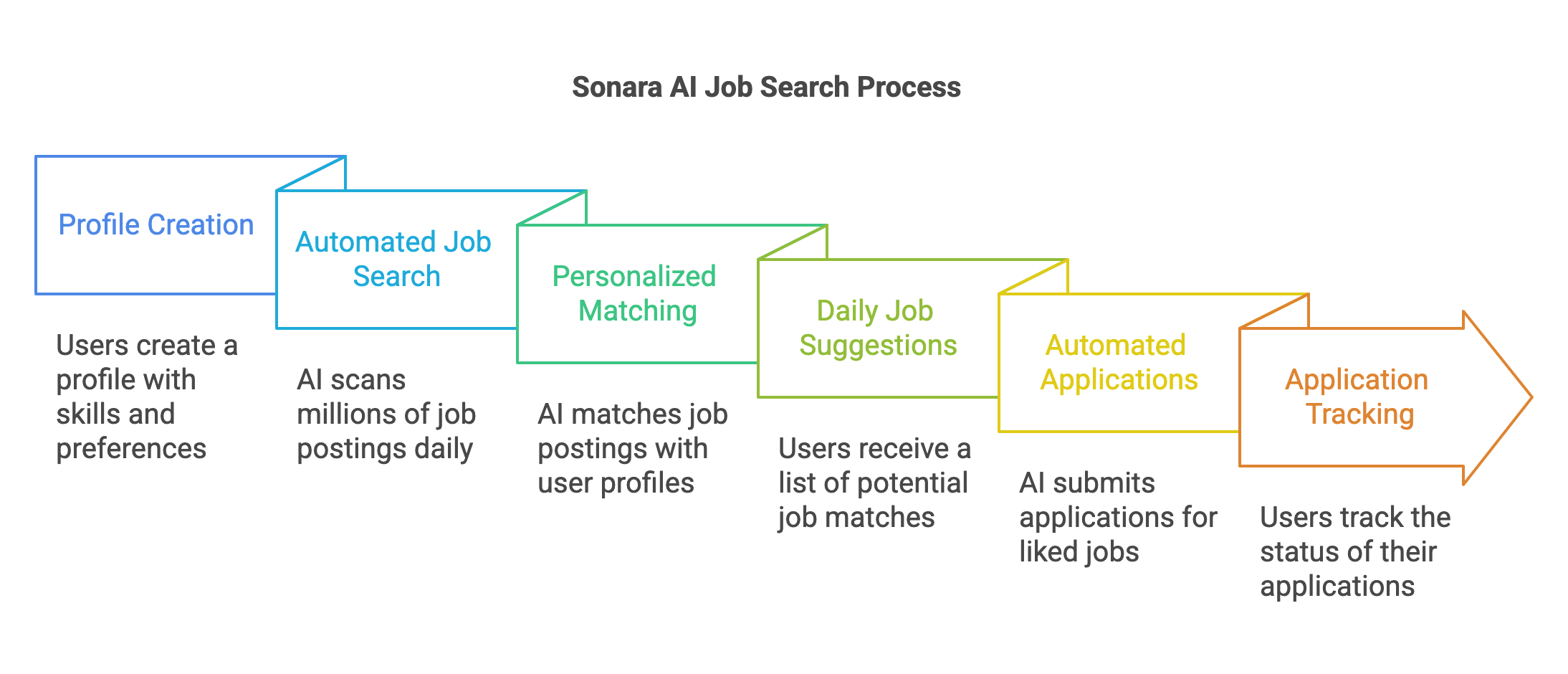
Sonara’s sign-up page promises to “Automate your job search in 3 simple steps”: upload your resume, complete a quick profile, then “We find jobs and fill out applications. All you have to do is hit submit.” Its terms and homepage add detail:
- Upload your resume. Sonara uses it to understand your experience.
- Complete a quick profile. Share preferences such as job title, salary range, location and career goals.
- Review your job queue. Sonara builds “AI curated job queues” of pre-selected listings. You can delete any job you do not want it to apply to and rate the ones you like.
- Let it fill out applications. The homepage says “We apply for you,” while the sign-up flow says you hit submit.
- Get replies. If you enable the alias email feature, employers see a unique alias address and Sonara forwards their messages to you.
Two caveats from the terms are worth knowing. Some employers use anti-bot checks and reCAPTCHA, which can block or delay automated applications. And cancelling your subscription does not withdraw applications that have already been submitted.
Sonara pricing in 2026
Sonara has no public pricing page. Its terms say the “specific billing terms for the services you order will be described on the offer page on the Site,” which you see during sign-up. Here is what we could confirm and what others report:
| Pricing item | What we found | Source |
|---|---|---|
| Public price list | None; billing terms shown during sign-up | Sonara terms of use |
| Renewal | Automatic, at your renewal date “or before submitting your 11th application, whichever comes first” | Sonara terms of use |
| Refunds | ”Provider does not guarantee refunds”; possible if you cancel before a trial ends, if one is offered | Sonara terms of use |
| Partial use | ”No prorated credit will be given” | Sonara terms of use |
| Reported price | $2.95 for a 14-day trial, then $23.95 every four weeks | 2026 third-party review in Google results; not confirmed by Sonara |
| Plans before 2024 | Pulse, Accelerate and Amplitude, listed at $19.99 to $79.99 a month in earlier versions of this review | No longer listed |
Source: Sonara terms of use (last updated November 5, 2024) and sign-up flow, read on October 7, 2026; prices appear only inside the sign-up flow.
The renewal clause matters most. Usage, not just the calendar, can trigger a charge. If you only want to test Sonara, count the applications it sends and cancel before the 11th if you do not plan to continue.
Pros and cons of Sonara AI
Pros
- A hands-off queue of matched US jobs that keeps running in the background.
- You can delete jobs from the queue before Sonara applies to them.
- The alias email option keeps your personal address private.
- A free public job board you can browse without an account.
- Phone support seven days a week.
- Now operated by an established career company after the 2024 relaunch.
Cons
- No public prices; you only see the offer during sign-up.
- A usage-based renewal trigger at the 11th application.
- Refunds are not guaranteed, and there is no prorated credit.
- US only.
- Independent reviewers say it sends the same resume to every role rather than tailoring each one.
- The 2024 shutdown cut off earlier subscribers, so its track record under the new owner is short.
What users say about Sonara
Sonara’s reviews are mixed, and many date from before the relaunch. Here is what we found on October 7, 2026:
- Trustpilot: Google showed Sonara’s Trustpilot page at 3.8 from 98 reviews. The review it surfaced, rated 5 stars, adds a caveat: “While applying for jobs was really easy, I kept seeing the jobs over and over again.”
- Product Hunt: Google showed 2.8 based on 13 community reviews.
- r/jobs: a long-running thread asking whether anyone has had success with AI application services (110+ comments) opens with: “I’m currently trying Sonara AI and I’m not impressed. I think I’m gonna cancel my subscription.” It began in 2023, before the relaunch, and was still drawing answers in August 2025.
- r/careerguidance: a 2025 thread comparing Sonara with three other auto-apply tools drew 60+ comments.
Independent 2026 reviews, several written by companies selling competing tools, repeat two points: Sonara is fast and easy to set up, but it does not tailor each resume, so interview rates depend heavily on how well your base resume fits.
Sonara vs AIApply vs JobHire.ai
These three tools come up together in searches. They differ mainly in how they charge and how much control you keep:
| Sonara | AIApply | JobHire.ai | |
|---|---|---|---|
| Model | AI job queue plus applications, US only | Resume, cover letter and interview toolkit plus Auto-Apply credits, one credit per application | AI auto-apply service with manual, delayed or instant modes |
| Public prices | No; shown at sign-up | No; shown after sign-up | No; shown after sign-up |
| Control | Delete jobs from your queue | Review drafts before sending | Choose manual or delayed sending |
| Refunds | Not guaranteed | Case by case | Non-refundable under its July 2026 policy |
Sources: Sonara terms of use, and our reviews of AIApply and JobHire.ai, all checked October 7, 2026.
Choose AIApply if writing and interview tools matter more than volume. Choose JobHire.ai if you want to switch between manual and automatic sending. Choose Sonara if you want a simple queue of US jobs and are comfortable with pricing shown only at sign-up.
Sonara vs JobsAICopilot
| Tool | Price (October 2026) | Auto-apply | Applications per day | Review mode | Resume tailoring | Free trial | Our verdict |
|---|---|---|---|---|---|---|---|
| Sonara | Shown at sign-up; reported $23.95 every 4 weeks after a $2.95 trial | Yes | Not published | Delete jobs from your queue; sign-up flow says you hit submit | Not described; reviewers report one resume for every role | Reported, not confirmed | A hands-off queue for US roles, with opaque pricing |
| JobsAICopilot | Premium $14.54/week; Elite $17.92/week | Yes | Up to 20 (Premium) or 50 (Elite) | Review Mode: approve every application | Each application tailored; AI-tailored resume for every application on Elite | No free trial | Published price, daily limits and approval before sending |
JobsAICopilot is our product.
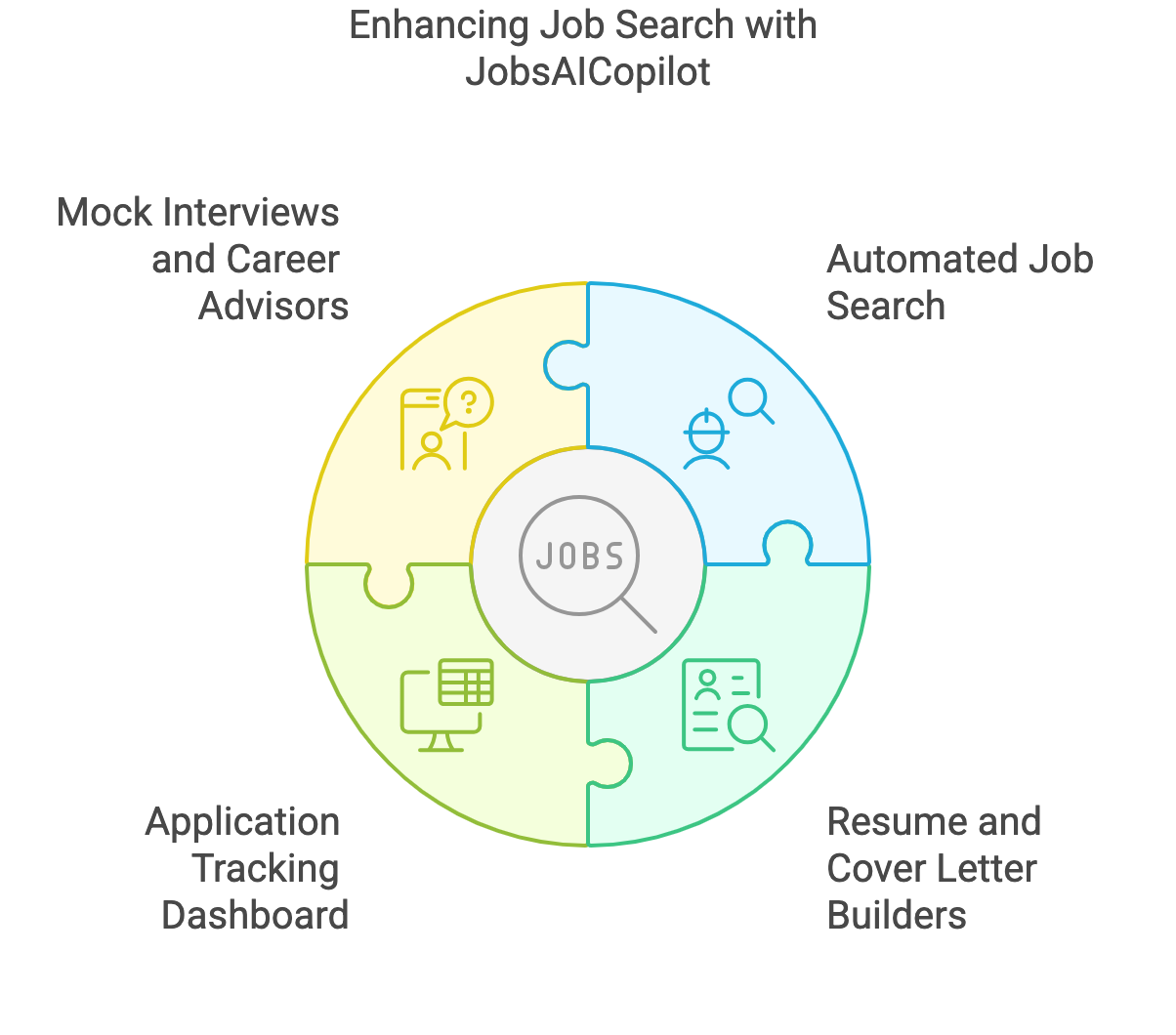
With JobsAICopilot, you upload your resume once and set filters for job titles, locations, remote work, salary and companies to exclude. The AI copilot scans 50,000+ company career pages every day, tailors each application and applies only to verified listings on official career pages.
Billing follows the weekly, monthly or quarterly plan you choose, not an application count. Premium includes one copilot and up to 20 applications a day; Elite includes three copilots and up to 50. Plans also include an AI Job Tracker, AI Resume Creator, AI Cover Letter Generator, AI Interview Simulator, AI Salary Copilot and a Hiring Manager Finder.
Sonara has one advantage: a free public job board you can browse before paying. JobsAICopilot has no free trial.
Alternatives to Sonara
Our Sonara alternatives guide compares eight auto-apply tools on public pricing, daily limits and renewal terms. For individual reviews, see LoopCV, LazyApply and AIApply. More reviews are in our job search resource reviews category.
Verdict: is Sonara AI worth it? (October 2026)
As of October 7, 2026, Sonara AI is a legitimate, operating service under Bold, not the closed startup some older articles describe. It does what it promises mechanically: it builds a queue of matching US jobs and fills out applications for you.
The trade-offs are transparency and tailoring. You cannot see prices before sign-up, a renewal can trigger at your 11th application, refunds are not guaranteed and reviewers say every role gets the same resume. If you try it, read the offer page carefully and track your application count.
If you prefer published pricing and an approval step for every tailored application, see how AI automated job application works in JobsAICopilot and compare plans on our pricing page.
Job Search Resource Reviews
Frequently Asked Questions
Still have a question?
Write to contact@jobsaicopilot.com or visit our contact page.
Does Sonara AI actually work?
Yes, in the sense that it finds matching US jobs and fills out applications for you; its sign-up flow says you then hit submit. Results vary. On October 7, 2026, Google showed Sonara at 3.8 from 98 Trustpilot reviews, with praise for ease of use and complaints about repeated listings, generic applications and forms blocked by anti-bot checks.
Is Sonara legitimate?
Yes. Sonara is a real service now operated under Bold: its site footer reads "© 2026, Bold Limited," and its terms of use are a contract with BOLD LLC. It suspended service in February 2024 and relaunched after BOLD acquired it. Read the renewal and refund terms before subscribing, because Sonara does not guarantee refunds.
Why did Sonara AI shut down?
Sonara suspended its service on February 1, 2024, and several 2026 reports attribute the closure to running out of funding. BOLD LLC acquired Sonara later in 2024 and relaunched it, and a post on Sonara's own Instagram account read "We paused. We rebuilt. We're back." As of October 2026, the site is live for US job seekers.
What does Sonara AI cost?
Sonara does not publish prices. Its terms say billing details appear on the offer page during sign-up. Some 2026 third-party reviews report a $2.95 trial for 14 days followed by $23.95 every four weeks, which we could not confirm on Sonara's own pages. The subscription renews at your renewal date or before your 11th application, whichever comes first.
Is Sonara AI free?
No. You can browse the public job board on Sonara's website without paying, but the automated job search and applications require a paid subscription. Sonara's terms say a refund may be issued if you cancel before a trial ends, if a trial is offered, and that refunds are otherwise not guaranteed. There is no prorated credit for partial use.


